
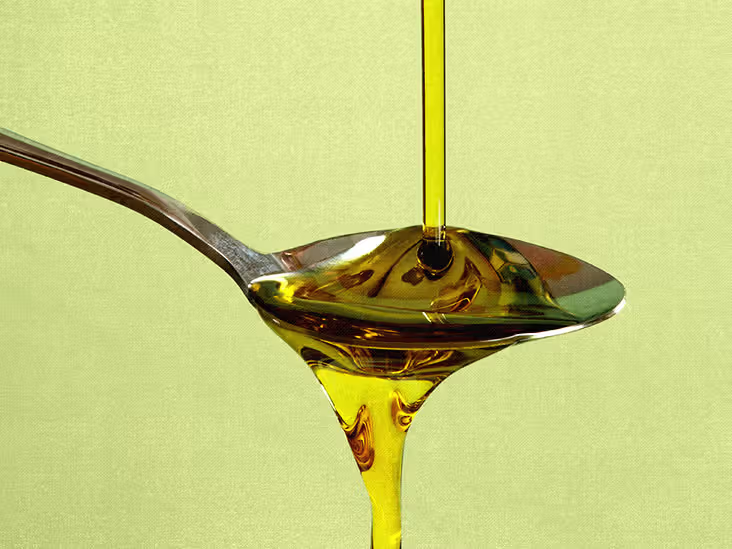
Olive oil, particularly extra virgin olive oil (EVOO), has long been celebrated for its health benefits, especially in promoting heart health. In India, where heart disease is a growing concern [1], incorporating olive oil into the diet can be a beneficial strategy for managing cholesterol levels.
Understanding Cholesterol and Its Types
Cholesterol is a fatty substance essential for building cells and secreting certain hormones. However, an imbalance can lead to health issues:
- LDL (Low-Density Lipoprotein):
Often referred to as “bad” cholesterol, high levels can lead to plaque buildup in arteries, increasing the risk of heart disease and stroke.
- HDL (High-Density Lipoprotein):
Known as “good” cholesterol, it helps remove LDL cholesterol from the bloodstream.
Maintaining a healthy balance between low-density and high-density cholesterol is crucial for cardiovascular health.
How Olive Oil Influences Cholesterol Levels
Olive oil is rich in monounsaturated fats, particularly oleic acid, which has been shown to lower LDL cholesterol levels while increasing HDL cholesterol. A comprehensive review of 27 studies concluded that olive oil consumption significantly decreased total cholesterol, LDL, and triglycerides and increased HDL more effectively than other plant oils [2]. This demonstrates the effectiveness of olive oil for cholesterol reduction.
Moreover, olive oil contains polyphenols, such as hydroxytyrosol and oleuropein, which possess antioxidant and anti-inflammatory properties. These compounds help protect LDL cholesterol from oxidation, a process that can lead to arterial damage and cardiovascular disease.
Scientific Evidence Supporting Olive Oil’s Benefits
Several studies have highlighted the positive effects of olive oil on cholesterol levels:
- A systematic review and meta-analysis published by Cambridge University Press of randomised controlled trials found that olive oil consumption reduced total cholesterol, LDL cholesterol, and triglyceride levels, while increasing HDL cholesterol.[3]
- Research from the University of California, Davis, indicated that extra virgin olive oil with a higher phenol content provides greater health benefits, including improved lipid profiles.[4]
Incorporating Olive Oil into the Indian Diet
In India, olive oil can be easily incorporated into traditional diets. It can be used for cooking, in salad dressings, or as a finishing drizzle over dishes. Choosing extra virgin olive oil ensures the retention of beneficial polyphenols and antioxidants.
However, it is crucial to consume olive oil in moderation due to its high-calorie content. While it provides health benefits, excessive intake can lead to weight gain, which may counteract its positive effects on cholesterol levels.
Conclusion
Olive oil is one of the best edible oils for heart health and cholesterol management. Its rich content of monounsaturated fats and polyphenols provides protective benefits against cardiovascular diseases. As with any dietary change, it is advisable to consult a doctor to tailor recommendations to individual health needs.
https://www.thelancet.com/journals/lansea/article/PIIS2772-3682(23)00016-1/fulltext
https://pubmed.ncbi.nlm.nih.gov/29420053/
https://www.cambridge.org/core/journals/british-journal-of-nutrition/article/effects-of-olive-oil-consumption-on-blood-lipids-a-systematic-review-and-doseresponse-metaanalysis-of-randomised-controlled-trials/E432E54AC39D1708E92FA2DB365EF015
https://olivecenter.ucdavis.edu/sites/g/files/dgvnsk14776/files/media/documents/NewOliveOilReport.pdf


